
Automating Bitbucket PR Labeling with AI & Slack
If you work with Bitbucket, you know how quickly pull requests (PRs) can pile up. Reviewers often waste time opening each PR to understand its scope. What if labels could be auto-generated, concise, and instantly shared with your team in Slack?
In this guide, we’ll show you how to build an n8n automation workflow that listens for new Bitbucket PRs, uses AI to summarize them, and pushes the label straight to a Slack channel for your testers and reviewers.
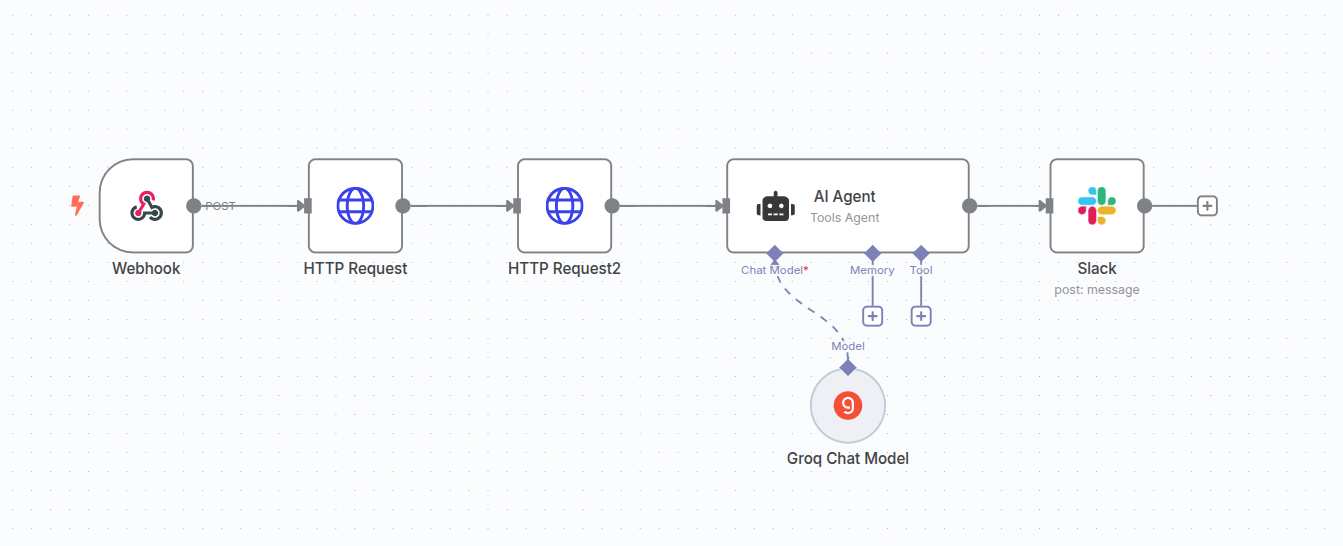
How the Automation Works
- Bitbucket Trigger Node – The workflow starts with a trigger that listens for newly created pull requests.
- HTTP Request Node – Fetch commit metadata and diff information for the PR to provide context.
- AI Agent Node (OpenAI or Claude) – The AI processes commit details and generates a concise, human-readable summary label. Example: “Fix: Login API authentication bug”.
- Slack Node – The final label is sent to your team’s dedicated Slack channel, so reviewers see exactly what the PR is about—instantly
Pro Tips & Variations
- Customize AI prompts to adjust tone—technical for developers, or simplified for QA testers.
- Extend the workflow to tag Jira issues automatically based on the PR summary.
- Send different Slack notifications to different channels depending on the PR branch (e.g., staging vs production).
Ready to Build Smarter DevOps Automations?
Conversantech helps teams design powerful n8n automations with AI integration. Whether you want to streamline code reviews, project management, or customer workflows, we’ve got you covered.